What Is Inflation? Why Your Money Buys Less Every Year
Prices keep rising, but a falling inflation rate does not mean cheaper groceries. Learn what inflation is, how it is measured, who it hurts, and whether Bitcoin can protect your savings.

You paid the same rent, walked into the same shop and bought the same basket of groceries, yet the total at the register is higher, and nobody can quite say when it happened. That gap between what you remember and what you pay has a name: inflation. It is the quiet force behind almost every money decision you make.
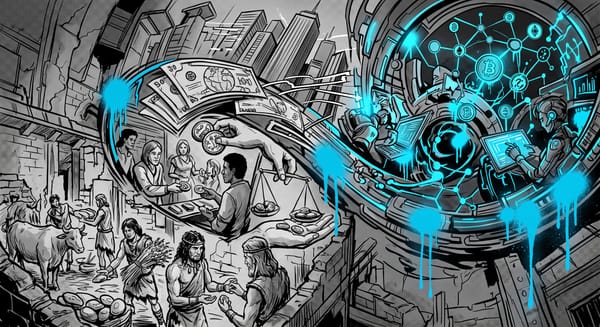
In our guide What Is Money? The Evolution From Barter to Web3, we saw that money only works because people trust it to hold its value. Inflation is what happens when that value slowly leaks away.
What Is Inflation Explained Simply?
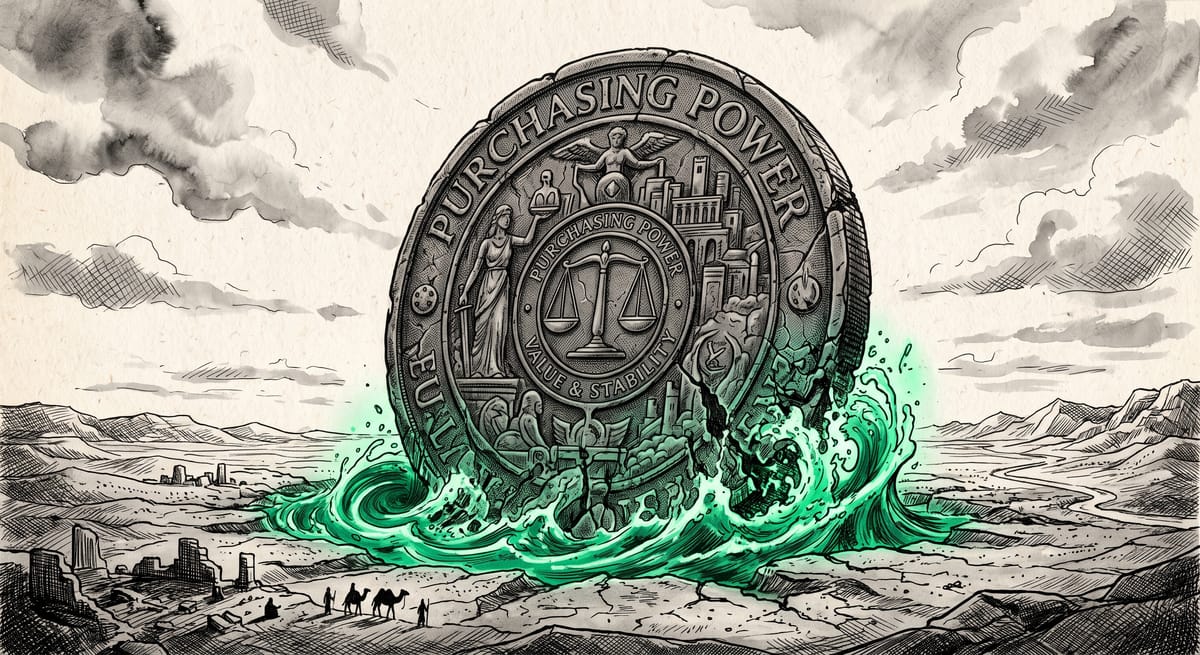
Inflation is the general rise in prices across an economy over time. As prices rise, each unit of money buys less than before, and economists measure the change as the yearly percentage difference in the cost of a basket of everyday goods and services. Here is the part almost everyone gets wrong: a falling inflation rate does not mean falling prices, only that prices are rising more slowly. Think of a car that is slowing down but still moving forward.
In the United States, inflation peaked at 9.1% in June 2022 and has cooled since, yet prices never went back to where they were. That is why inflation is really about purchasing power. Something that cost one dollar in 2000 costs almost two dollars in the United States today, so your money did not disappear, it simply shrank.
How Is Inflation Measured?
Statisticians build a virtual shopping basket covering food, rent, fuel, clothes, healthcare, transport and more, price the same basket every month and compare it with a year earlier. The result is the Consumer Price Index, or CPI. Because the basket is an average, it will not match your receipt exactly: if you rent, drive a lot or spend most of your budget on food, your personal inflation can run higher or lower than the official number.
The figure you see in headlines also comes in two versions. Headline inflation includes everything, while core inflation strips out food and energy because their prices swing wildly. In August 2026, according to US Bureau of Labor Statistics data, headline inflation was 3.4% while core inflation was 2.4%, which suggests that energy was doing much of the damage.
What Are the Three Types of Inflation?
Economists usually group inflation into three types, depending on where the pressure comes from.
- Demand pull inflation: too much money chasing too few goods. When people want to buy more than the economy can supply, sellers raise prices, as in a hot housing market where every home gets five offers.
- Cost push inflation: the pressure comes from the supply side. When the cost of energy, raw materials or shipping jumps, businesses pass it on to customers, and an oil price shock is the classic example.
- Built in inflation: a feedback loop. If everyone expects prices to rise, workers ask for higher pay and companies raise prices to cover it, so expectations become a force of their own.
In real life the three often overlap, and the mix changes from one episode to the next.
What Is Driving Inflation Right Now?
In 2026 the main story is energy. The IMF says global inflation was 4.1% in 2025 and expects 4.7% in 2026 before easing to 3.9% in 2027, and it notes that energy prices are about 25% higher than before the war in the Middle East began in late February.
The pattern shows up in every major region. In the United States, energy prices rose 16.3% over the year to August, while food at home rose only 2.2%. In the euro area, Eurostat reports inflation of 3.2% in August, up from 2.0% a year earlier, and in the United Kingdom the ONS reports 3.1%, with motor fuel up 23.0% and food up just 1.3%. The same headline number can have very different causes, and this year the pressure is coming from the fuel pump far more than from the supermarket shelf.
How Does the Money Supply Affect Prices?
There is also a slower, deeper driver. When the amount of money in circulation grows faster than the economy can produce goods and services, prices tend to rise over time. Economists still debate how strong and how fast this effect is, but over long periods more money chasing the same goods has a way of showing up in prices.
Why Do Central Banks Aim for 2% Inflation?
The US Federal Reserve, the European Central Bank and the Bank of England all target 2%, although the Fed uses a measure called PCE while the ECB and the Bank of England use consumer price measures. Why not zero? Because zero is dangerous: falling prices, called deflation, make people delay purchases and make debts heavier, which can freeze an economy.
A little inflation leaves room to cut interest rates when trouble hits and keeps expectations stable. The interest rate is also the central banks' main tool, and that is the story of our next guide.
Who Benefits From Inflation and Who Is Hurt?
Cash savers lose first. If your savings earn 2% and inflation is 3%, your money buys about 1% less each year even though the balance grows, which makes inflation a silent tax on idle cash. People on fixed incomes and workers whose pay lags behind prices also lose ground, while borrowers with fixed rate debt often gain, because they repay with money that is worth less than when they borrowed it. Owners of assets that tend to rise with prices, such as property, can gain too.
At the extreme, inflation destroys economies. At the worst point of the Weimar hyperinflation in 1923, German prices rose by tens of thousands of percent in a single month, and in Zimbabwe in 2008 annual inflation was estimated in the hundreds of billions of percent. Those are not normal economic cycles but the collapse of trust in money itself.
Does Inflation Affect Bitcoin and Crypto?
Bitcoin was designed with a hard limit of 21 million coins, and more than 95% of them have already been mined. The reward for each new block was cut to 3.125 BTC in the April 2024 halving, and no central bank can print more. That is why supporters call it digital gold and argue it protects savings from currency dilution.
Is Bitcoin Really an Inflation Hedge?
Supporters point to the fixed supply: over long periods, they argue, an asset that cannot be diluted should hold its value better than currencies that can. Skeptics point to the price. Bitcoin trades on demand and risk appetite, and it can fall 50% while groceries keep getting more expensive, yet a hedge is supposed to protect you exactly when you need it.
The honest answer sits in between, because scarcity is not the same as stability. A fixed supply protects against dilution, not against price swings.
This article is educational and not financial advice.
The Bottom Line
Inflation is not a mystery. It is the slow shrinking of what your money can buy, driven by demand, costs, expectations and the amount of money in the system. Watch the level, not just the rate, check whether the pressure comes from energy or from everyday goods, and remember that money only works while people trust it.
To understand why some people built an alternative, we first need to understand who controls money today. Next up: interest rates and central banks.
Frequently Asked Questions
- What is a simple definition of inflation?
Inflation is the general rise in prices over time, which means each unit of money buys less than before.
- What are the main causes of inflation?
The three main types are demand pull, cost push and built in inflation. Demand comes from strong spending, costs come from things like energy, and built in inflation comes from expectations feeding wages and prices. A fast growing money supply can add to all three.
- How does inflation affect my savings?
If your savings earn less than the inflation rate, your money buys less each year even though the balance grows.
- How is inflation measured by central banks?
Statistical agencies track the price of a fixed basket of goods and services and compare it with a year earlier. The result is the CPI. Some central banks, like the Fed, also use a related measure called PCE.
- Does inflation affect the price of Bitcoin?
Yes, but not in a simple way. Bitcoin's supply is fixed, yet its price moves with demand and risk appetite, so it can rise or fall regardless of inflation.